This lobster ravioli isn’t about fancy ingredients alone; it’s about the simple act of elevating a humble pasta dish into something special. I love how the sweetness of lobster contrasts with the richness of the buttery sauce, making each bite feel like a small celebration. It’s surprisingly doable, even on a weeknight, if you keep the ingredients straightforward and focus on the process.
What draws me to this recipe is its balance—luxury without pretense. I remember the first time I made it, the aroma of lobster shells simmering with herbs filled the kitchen, and suddenly, it felt like I was bringing a bit of seaside elegance right into my home. It’s a dish that feels indulgent but is rooted in comforting, familiar flavors.
Focusing on the overlooked art of balancing luxury with everyday comfort, this lobster ravioli recipe is about transforming simple ingredients into a special meal that feels indulgent yet approachable. It’s about turning a quick weeknight dinner into a celebration of seafood and pasta, without the fuss.
Elevating Pasta with Seafood
- Making this dish reminds me of seaside vacations, the aroma of lobster shells filling the kitchen with nostalgia.
- There’s a thrill in crafting something so luxurious from humble ingredients, it’s a small act of indulgence I cherish.
- Seeing the vibrant orange of lobster meat spooned into tender pasta always sparks a quiet pride in my cooking skills.
- This recipe has become my comfort food, a reminder that elegance can be simple and approachable at home.
- Cooking lobster ravioli feels like a special secret I get to keep—every bite a little celebration.
The story behind this recipe
This recipe came together one rainy afternoon when I was craving something fancy but didn’t want to fuss. I had some lobster shells in the freezer, left over from a seafood boil, and I kept thinking about how to turn that rich, briny flavor into pasta. It’s funny how a simple idea—just making lobster stock—can transform into a dish that feels like a little luxury. I remember the first time I rolled out the pasta by hand, feeling the dough’s resilience and watching it turn silky smooth, ready to cradle that tender lobster filling. Now, it’s become a go-to for when I want to impress without stress, a reminder that good things often come from a bit of patience and a curious mind.
Trivia and Historical Notes
- Lobster ravioli gained popularity in upscale Italian restaurants in the late 20th century, blending luxury seafood with traditional pasta.
- The dish is believed to have origins in Northern Italy, where lobster was once considered a rare delicacy reserved for nobility.
- In some regions, ravioli filled with seafood dates back to medieval times, but lobster versions became more common with the rise of seafood markets.
- Quirky trivia: In Italy, lobster pasta is sometimes served with a splash of cognac, adding a smoky depth to the rich filling.
Ingredient breakdown
- Lobster meat: I love using fresh, tender lobster — it’s sweet and succulent, really pops with a quick sear before filling the pasta. Swap for cooked shrimp if you want a milder, budget-friendly option.
- Pasta dough: I prefer a simple egg-based dough that’s silky and resilient, perfect for rolling thin. If you’re short on time, store-bought sheets work fine, just dust with flour to prevent sticking.
- Lobster shells: Simmering shells gives a rich, briny flavor that forms the base of the sauce. Keep in mind, if you skip this step, your sauce will lack depth—consider adding a splash of seafood stock instead.
- Herbs and aromatics: I rely on a bit of garlic and fresh tarragon for brightness—these brighten the richness of lobster. Swap for basil or thyme if that’s what you have; just avoid overpowering the delicate lobster taste.
- Butter and cream: The butter adds a nutty richness, while the cream makes the sauce luxuriously velvety. For a lighter touch, substitute half-and-half, but don’t skip the butter—it’s the flavor anchor.
- Lemon zest: I find a touch of lemon brightens the entire dish, cutting through the richness with a zingy freshness. Skip if you prefer a more mellow profile, but it’s worth keeping for that pop of brightness.
Spotlight on key ingredients
Lobster:
- Lobster meat: I love using fresh, tender lobster — it’s sweet and succulent, really pops with a quick sear before filling. Swap for cooked shrimp if you want a milder, budget-friendly option.
- Lobster shells: Simmering shells gives a rich, briny flavor that forms the base of the sauce. Keep in mind, if you skip this step, your sauce will lack depth—consider adding a splash of seafood stock instead.
Pasta dough and lemon zest:
- Pasta dough: I prefer a simple egg-based dough that’s silky and resilient, perfect for rolling thin. If you’re short on time, store-bought sheets work fine, just dust with flour to prevent sticking.
- Lemon zest: I find a touch of lemon brightens the entire dish, cutting through the richness with a zingy freshness. Skip if you prefer a more mellow profile, but it’s worth keeping for that pop of brightness.
Notes for ingredient swaps
- Seafood Swap: Use cooked shrimp or scallops instead of lobster for a more budget-friendly or readily available option. They’ll still bring a sweet, briny flavor.
- Dairy-Free: Replace heavy cream with coconut cream or cashew cream for a rich, dairy-free sauce that still offers velvety texture and flavor.
- Pasta Dough: Use store-bought fresh pasta sheets if you’re short on time, dust with flour generously to prevent sticking during filling and sealing.
- Herbs and Aromatics: Swap tarragon for basil or chives if that’s what you have; just keep in mind these change the flavor profile slightly.
- Lemon Brightness: Omit lemon zest if preferred, but it’s the quick pop of citrus that cuts through the richness and elevates the dish.
- Stock Base: If lobster shells aren’t available, use a good-quality seafood or fish stock to deepen the sauce’s briny, oceanic flavor.
- Butter: For a lighter sauce, substitute part of the butter with olive oil, but remember it won’t have quite the same nutty depth.
Equipment & Tools
- Pasta roller or rolling pin: To roll dough thin and even.
- Small spoon: For filling each ravioli precisely.
- Sharp knife or cutter: To cut pasta into squares cleanly.
- Large pot: To boil the ravioli.
- Saute pan: To prepare the sauce and finish the dish.
Step-by-step guide to Lobster Ravioli
- Gather your equipment: a pasta roller or rolling pin, a small spoon, a sharp knife, a large pot, and a saute pan. Have your lobster meat and ingredients ready for filling and sauce.
- Prepare the lobster filling: chop cooked lobster meat finely. Mix with a touch of ricotta, lemon zest, salt, pepper, and a pinch of fresh tarragon. Set aside.
- Roll out the pasta dough: divide into manageable portions. Use a pasta machine or rolling pin to get it thin enough to see your hand through. Dust with flour to prevent sticking.
- Cut into squares: use a sharp knife or a cutter to make 3-inch squares. Keep covered with a damp towel if not filling immediately.
- Fill the ravioli: place a small spoonful of lobster mixture in the center of each square. Brush edges with water, then fold over to seal, pressing out air and crimping edges.
- Cook the ravioli: bring a large pot of salted water (about 100g salt per liter) to a gentle boil. Drop in ravioli, cook for 3–4 minutes, until they float and are tender.
- Simmer lobster stock: in a saucepan, melt butter, add lobster shells, garlic, and a sprig of tarragon. Simmer gently for 20 minutes. Strain and set aside.
- Make the sauce: in a pan, melt butter over medium heat (about 160°C/320°F). Add lobster stock, reduce slightly, then stir in cream. Cook until velvety and fragrant, about 5 minutes.
- Finish the ravioli: gently lift cooked pasta with a slotted spoon. Toss into the sauce, letting them soak up the flavors for a minute.
- Plate and garnish: arrange ravioli on a warm plate. Drizzle with the sauce, sprinkle with fresh herbs or lemon zest. Serve immediately while warm and fragrant.
Rest cooked ravioli briefly on a warm plate. Serve immediately, garnished with herbs or lemon zest for brightness.
How to Know It’s Done
- Ravioli float to the surface and are tender when cooked.
- Sauce coats the back of a spoon with a glossy, velvety sheen.
- Lobster filling is firm but moist, with a bright, seafood aroma.
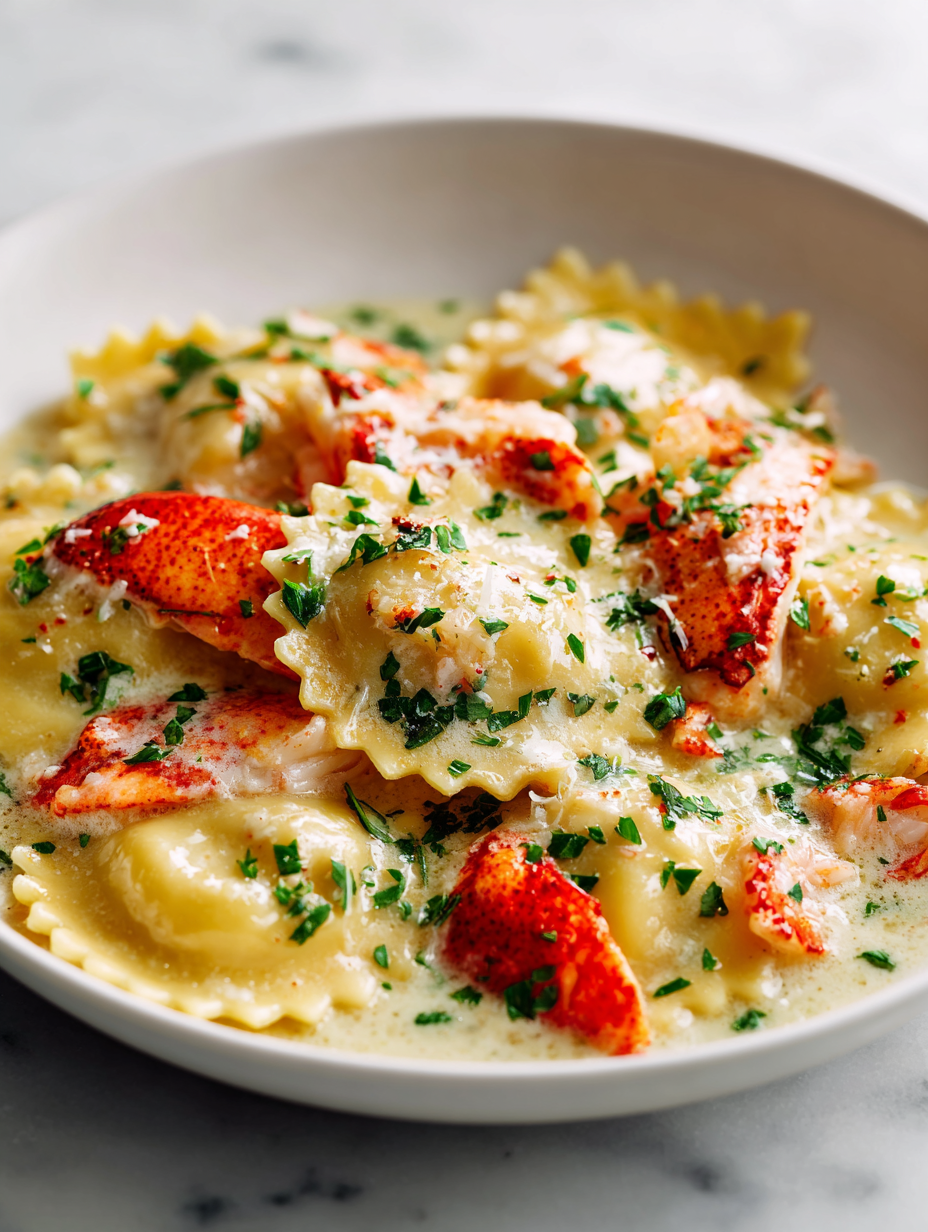
Lobster Ravioli with Creamy Seafood Sauce
Ingredients
Equipment
Method
- Cook the lobster shells with garlic in a small amount of butter over medium heat until fragrant, about 2 minutes. Add water to cover and simmer for 20 minutes, then strain to make a rich lobster stock. Set aside.
- Mix the flour and eggs together in a bowl, then knead into a smooth, elastic dough. Wrap in plastic and let rest for 20 minutes to relax the gluten.
- Divide the rested dough into small portions and roll out thinly using a pasta roller or rolling pin, dusting with flour to prevent sticking. Aim for sheets that are almost translucent.
- Cut the rolled dough into 3-inch squares using a sharp knife or cutter. Keep covered with a damp towel to prevent drying out.
- Fill each square with a small spoonful of finely chopped lobster meat mixed with lemon zest, tarragon, salt, and pepper. Brush edges with water, then fold over and press to seal, ensuring no air pockets remain.
- Bring a large pot of salted water to a gentle boil. Carefully drop in the ravioli and cook for 3–4 minutes, until they float and are tender.
- Meanwhile, melt butter in a saute pan over medium heat. Add lobster shells and cook for 2 minutes until fragrant.
- Add lobster stock to the shells and simmer for 10 minutes, then strain to remove shells, leaving a flavorful broth. Reduce this broth slightly until it thickens a bit.
- Stir in the heavy cream and lemon zest into the reduced stock, simmering gently until the sauce thickens and becomes velvety, about 5 minutes.
- Using a slotted spoon, transfer the cooked ravioli into the sauce, gently tossing to coat each piece and letting them soak up the flavors for about a minute.
- Serve the lobster ravioli hot, garnished with extra tarragon or lemon zest if desired, and enjoy this elegant yet approachable seafood dish.
Tips for Perfect Lobster Ravioli
- Bolded mini-head: Use a pasta roller for even, thin sheets; hand-rolling works but watch for uneven thickness.
- Bolded mini-head: Seal edges with a wet brush to prevent filling from escaping during boiling.
- Bolded mini-head: Cook ravioli until they float and are tender, about 3-4 minutes; avoid overcooking to keep texture firm.
- Bolded mini-head: Reduce lobster stock until slightly thickened for a richer, more concentrated sauce flavor.
- Bolded mini-head: Add lemon zest at the end of the sauce cooking to preserve its bright, citrusy aroma.
- Bolded mini-head: Rest cooked ravioli briefly on a warm plate before serving to allow flavors to meld.
- Bolded mini-head: For an extra touch, sprinkle with chopped fresh herbs just before plating to add color and freshness.
Common Lobster Ravioli Mistakes
- FORGOT to check pasta for doneness → Test for tenderness and floatation.
- DUMPED sauce before flavor fully developed → Simmer longer for depth and richness.
- OVER-TORCHED lobster filling → Keep filling chilled; don’t cook lobster twice.
- MISSED sealing edges properly → Use a little water to seal tightly and prevent leaks.
Quick fixes and pantry swaps
- When sauce shimmers and smells briny, it’s ready for the ravioli.
- Splash hot pasta water if ravioli stick or clump together during boiling.
- Patch over a cracked pasta sheet with a tiny bit of water and reroll gently.
- Shield delicate lobster filling by folding dough tightly and sealing edges well.
- Rescue overcooked ravioli by tossing in a bit of fresh, hot sauce to rehydrate and shimmer.
Prep, store, and reheat tips
- Prepare the lobster filling and cut pasta squares a day in advance; keep covered in the fridge to prevent drying out, and ensure filling stays moist and fragrant.
- Lobster stock can be made up to 2 days ahead; store in an airtight container in the fridge and reheat gently until steaming with a rich, briny aroma.
- Cooked ravioli can be refrigerated for up to 24 hours; gently reheat in simmering water until just warmed through, watching for the pasta to retain its tender bite.
- The sauce can be made a day ahead, then gently reheated, stirring often. It will thicken slightly; add a splash of hot water or seafood stock to loosen if needed, until it shimmers and smells fragrant.
- For best flavor, assemble and cook the ravioli fresh, but if needed, they maintain good texture for a few hours refrigerated. Reheat quickly to preserve delicate pasta and seafood flavors.
Top questions about Lobster Ravioli
1. Can I use frozen lobster meat?
Use fresh lobster meat for the best flavor, but cooked, frozen lobster works in a pinch. Look for firm, sweet meat.
2. Can I swap lobster for other seafood?
Yes, you can substitute shrimp or scallops for lobster. They’re milder but will still add seafood richness.
3. How do I know when ravioli are done?
Cook the ravioli in boiling salted water for 3-4 minutes until they float and are tender. Don’t overcook.
4. Can I prepare the filling in advance?
Make the filling ahead of time and keep it covered in the fridge for up to a day. Assemble and cook fresh.
5. How should I store leftovers?
Store leftover cooked ravioli in an airtight container in the fridge for up to a day. Reheat gently in hot water or microwave.
6. What’s the best way to roll pasta dough?
Use a pasta roller or a rolling pin to get thin, even sheets. Dust with flour to prevent sticking during rolling.
7. How do I make lobster stock?
Simmer lobster shells in water with aromatics for 20 minutes to make a flavorful stock. Strain before using.
8. How do I thicken the sauce?
Reduce the lobster stock until slightly thickened for a richer sauce. Stir in cream and butter for a velvety finish.
9. When should I add lemon zest?
Add lemon zest at the end of cooking the sauce for a bright, citrus burst that balances richness.
10. How do I serve lobster ravioli?
Gently toss cooked ravioli in the sauce and serve immediately. Garnish with herbs or lemon zest for freshness.
Cooking lobster ravioli feels like a tiny act of rebellion—luxury within reach, if only for a moment. It’s a dish that smells like the sea and tastes like celebration, perfect for when you need to remind yourself that good food doesn’t have to be complicated.
And honestly, once you get the hang of that delicate fold and velvety sauce, it feels like a secret worth keeping. Whether it’s a special occasion or just a quiet weekend treat, this dish turns an ordinary meal into something memorable.