When I first started making French Onion Soup, I was struck by how simple ingredients could evolve into something so rich and layered. The real secret is in the slow caramelization of the onions—taking your time to coax out their natural sweetness. It’s a process that demands patience, but the aroma that fills the kitchen makes it worth every minute.
There’s something meditative about watching those onions soften and turn a deep amber. It’s a bit like a small, slow magic trick happening right on your stovetop. This soup isn’t just comfort food; it’s a reminder that taking the time for good things pays off. Each spoonful feels like a warm hug, especially when topped with crusty bread and bubbling cheese.
Focusing on how caramelizing onions slowly over a low flame transforms their sweetness and depth, making the soup a meditative process that turns humble ingredients into something unexpectedly luxurious and comforting.
The quiet magic of slow caramelization
- Caramelizing onions slowly taught me patience I never knew I had, and now I find comfort in the process.
- There’s a nostalgic rush each time I smell the sweet, smoky aroma fill the kitchen—like childhood memories waking up.
- Getting this soup just right feels like a tiny victory, especially when the cheese bubbles up perfectly brown.
- I used to rush through making it, but now I savor every step—it’s become my favorite way to unwind after a busy day.
The quiet magic of slow caramelization
- My first memory of making French Onion Soup was in a tiny apartment kitchen, where the smell of slow-cooked onions seemed to fill every corner. It was a quiet Sunday, and I was experimenting with caramelizing onions for the first time, unsure if I’d mess up or find something unexpectedly delicious.
- That deep, sweet aroma drifting through the apartment made me realize how simple ingredients—onions, broth, cheese—could come together into something so comforting. It’s not just about the taste, but the process: patiently coaxing out their natural sugars, turning humble slices into something rich and layered.
- Now, making this soup is a ritual I cherish. It’s a slow dance of patience and aroma, a reminder of how good things often take time. Each bowl feels like a small victory, especially when the cheese melts into a bubbling, golden crust on top.
Historical & Cultural Trivia
- French Onion Soup dates back to Roman times, where simple broths with onions were common in rural France.
- The dish gained prominence in Parisian bistros in the 18th century, often served with rustic bread and cheese.
- Traditionally, the caramelization of onions was slow, done over open fires, which gave the soup its deep, smoky flavor.
- The use of gratinée, or melted cheese topping, became popular in the 19th century, adding a luxurious touch to humble ingredients.
- In some regions, the soup was considered peasant food, but its rich flavors made it a staple in French culinary history.
Ingredient breakdown: key components
- Yellow onions: I used sweet, yellow onions because their natural sugars caramelize beautifully, giving that rich, smoky flavor. Swap with shallots for a milder sweetness, but skip the depth.
- Beef broth: I prefer homemade or low-sodium for control over salt. A good, rich broth makes all the difference—store-bought is fine, just watch the salt level and boost with a splash of soy if needed.
- Butter: I always start with butter for that gentle, nutty aroma during caramelization. Olive oil can work in a pinch, but it won’t develop quite the same richness or flavor complexity.
- Gruyère cheese: This melts into a bubbly, golden crust that’s essential. Cheddar or Swiss are okay, but they won’t give you that authentic, nutty finish. Use a good quality cheese, it shows.
- Baguette slices: I toast mine until golden and crispy—crucial for that satisfying crunch. Day-old bread works perfectly, just toast it longer if it’s a bit stale.
- Dry white wine: Adds a bright, slightly acidic note to balance the sweetness. Skip if you prefer a non-alcoholic version, but it does bring a subtle complexity.
- Thyme: A few sprigs of fresh thyme add an earthy, herbal note. Dried thyme is okay, but fresh really brightens the flavor—don’t skip it.
Spotlight on key ingredients
Yellow onions:
- I use sweet, yellow onions because their natural sugars caramelize beautifully, giving that rich, smoky flavor. Swap with shallots for a milder sweetness, but skip the depth.
- Beef broth: I prefer homemade or low-sodium for control over salt. A good, rich broth makes all the difference—store-bought is fine, just watch the salt level and boost with a splash of soy if needed.
- Gruyère cheese: This melts into a bubbly, golden crust that’s essential. Cheddar or Swiss are okay, but they won’t give you that authentic, nutty finish. Use a good quality cheese, it shows.
Cheese & Wine:
- Gruyère cheese: It’s the key for that gooey, browned topping—melts smoothly and develops a nutty aroma during baking. Use freshly grated for best meltability and flavor.
- White wine: Adds a bright, acidic note that balances the sweetness of caramelized onions. Use a dry variety; avoid sweet wines that can skew the flavor.
Notes for ingredient swaps
- Sweet onions: I use yellow onions for their natural sweetness, but you can swap with shallots for a milder, more delicate flavor—just watch their quicker cooking time.
- Broth options: Beef broth lends richness, but chicken or vegetable broth work fine for a lighter, less intense flavor—adjust seasoning accordingly.
- Butter: I prefer butter for its nutty aroma, but olive oil can be a good vegan substitute—though it won’t develop that same toasty depth.
- Cheese: Gruyère is classic, but Swiss or mozzarella can melt nicely—just expect a different flavor and slightly less complexity.
- Bread: Day-old baguette slices toast perfectly, but any rustic bread or sourdough works—aim for slices about 1/2 inch thick for the best crunch.
- Wine: Dry white wine adds brightness—omit if you prefer a non-alcoholic version, or substitute with a splash of apple cider vinegar for acidity.
- Herbs: Fresh thyme is ideal for that earthy aroma, but dried thyme or a pinch of herbes de Provence can substitute—use sparingly to avoid overpowering.
Equipment & Tools
- Large heavy-bottomed pot or Dutch oven: For slow caramelizing onions and simmering soup.
- Wooden spoon: To stir onions gently and prevent sticking.
- Sharp knife: For slicing onions evenly.
- Baking dish or oven-safe crocks: To finish the soup with cheese topping.
- Toaster or oven: For toasting bread slices.
- Baking sheet: To hold crocks during baking.
Step-by-step guide to French Onion Soup
- Equipment & Tools: Gather a large heavy-bottomed pot or Dutch oven, a wooden spoon, a sharp knife, and a baking dish or oven-safe crocks.
- Slice 4-5 large yellow onions thinly, about 1/8 inch. Consistency matters for even caramelization.
- Heat the pot over low-medium heat (~150°C / 300°F). Add 2 tbsp butter and 1 tbsp olive oil. Once melted, add onions.
- Cook onions slowly, stirring frequently. Let them soften and release their sugars—about 45-60 minutes. They should turn a deep amber, fragrant with caramel notes.
- If onions start sticking or burning, lower the heat and add a splash of water or broth. Scrape up browned bits for flavor.
- Once onions are richly caramelized, pour in 1/2 cup dry white wine. Scrape the bottom to deglaze, cooking until the wine mostly evaporates, about 5 minutes.
- Add 4 cups beef broth (or a mix of beef and chicken for depth). Stir well, bring to a simmer, and cook uncovered for 20 minutes to develop flavors.
- While soup simmers, preheat your oven to 220°C / 430°F. Slice baguette into 1/2 inch rounds, toast until golden and crispy, about 8 minutes.
- Taste and adjust seasoning with salt and pepper. Ladle soup into oven-safe crocks or a baking dish. Top each with toasted bread slices, then generously cover with grated Gruyère.
- Place the dishes on a baking sheet and bake until the cheese bubbles and turns golden, about 10 minutes. For extra browning, broil for an additional 2 minutes, watching closely.
- Remove from oven, let sit for 2 minutes. Rest briefly to prevent burns and allow flavors to settle. Serve hot, with a bit of cheese crust and caramelized onions visible.
Let the baked soup sit for 2 minutes to cool slightly. Serve directly from the crocks or bowls, ensuring the cheese topping is bubbly and golden. Garnish with a sprig of thyme or a dash of freshly ground pepper if desired.
How to Know It’s Done
- Onions are deeply caramelized, with a rich amber color and sweet aroma.
- Soup is bubbling vigorously around the edges, indicating proper temperature and consistency.
- Cheese is melted, bubbly, and golden brown, with a slight crisp on top.
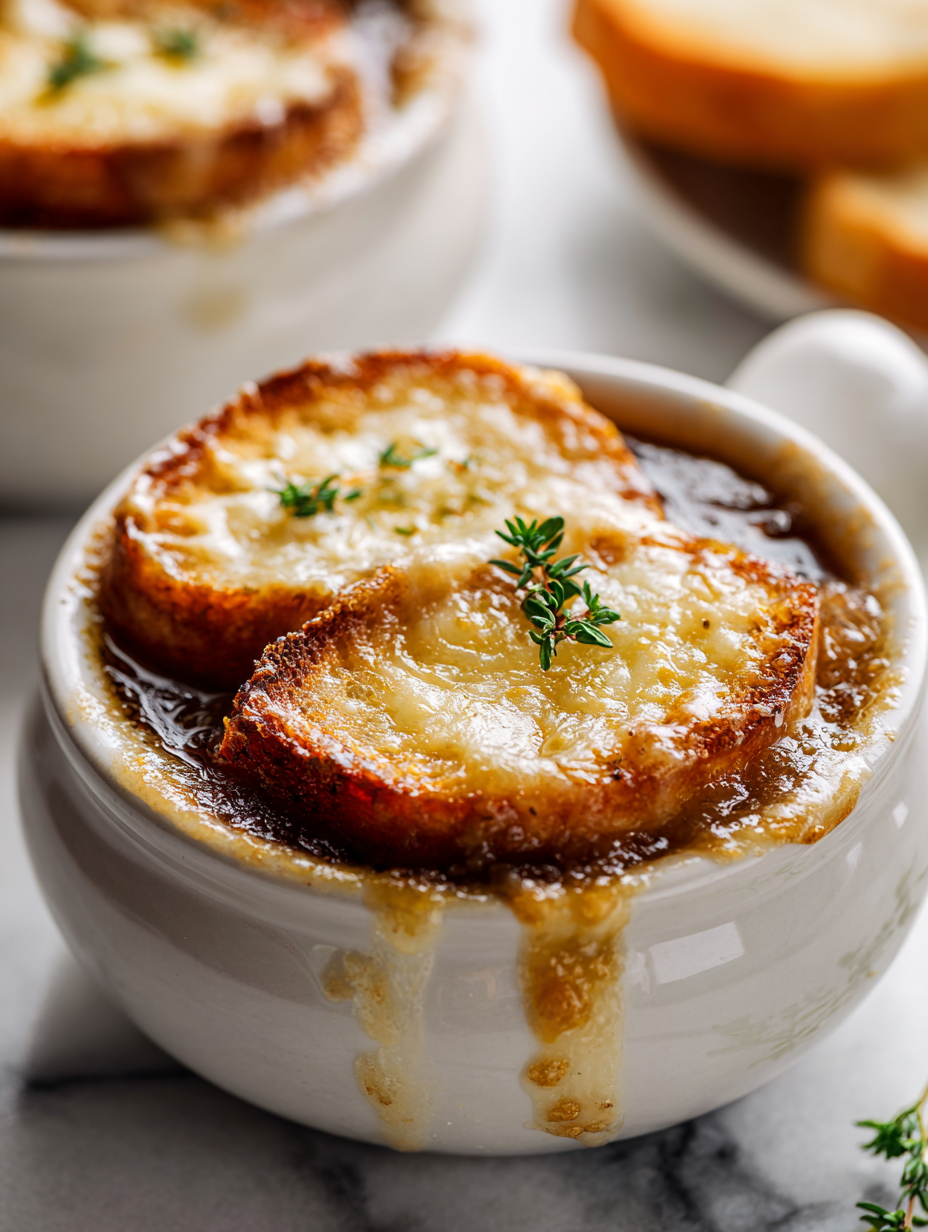
French Onion Soup
Ingredients
Equipment
Method
- Thinly slice the yellow onions, aiming for even slices about 1/8 inch thick.
- In a large heavy-bottomed pot, melt the butter with the olive oil over low-medium heat, allowing the mixture to warm gently.
- Add the sliced onions to the pot and stir to coat them evenly with the butter and oil. Cook slowly, stirring frequently so they soften evenly.
- Continue cooking over low heat, stirring often, until the onions turn a deep amber color and smell sweet and smoky, about 45-60 minutes. Adjust the heat if necessary to prevent burning.
- Once caramelized, pour in the white wine and deglaze the pot, scraping up any browned bits from the bottom. Let the wine cook off for about 5 minutes until mostly evaporated.
- Add the beef broth and thyme sprigs to the pot. Bring the mixture to a gentle simmer and cook uncovered for 20 minutes to develop the flavors.
- While the soup simmers, preheat your oven to 220°C / 430°F. Slice the baguette into rounds about 1/2 inch thick and toast them until golden and crispy, about 8 minutes.
- Remove the thyme sprigs from the soup and season with salt and pepper to taste. Ladle the hot soup into oven-safe crocks or a baking dish.
- Top each serving with a toasted bread round, then sprinkle generously with grated Gruyère cheese.
- Place the dishes on a baking sheet and bake in the oven until the cheese bubbles and turns golden brown, about 10 minutes. For extra browning, broil for 2 minutes, watching carefully.
- Remove from the oven, let sit for 2 minutes to cool slightly, then serve hot, enjoying the bubbling cheese and rich, caramelized onions in every spoonful.
Tips and Tricks for Perfect Onion Soup
- onions: Use a wide, heavy-bottomed pan to ensure even caramelization and avoid hot spots.
- Slow heat: Keep the flame low to develop sweetness gradually, about 45-60 minutes until deep amber.
- Scrape the pan: Use a wooden spoon to loosen browned bits during deglazing; they add flavor and prevent sticking.
- Cheese layering: Cover the toasted bread generously with grated cheese and broil until bubbly and golden.
- Broth simmer: Let the soup simmer uncovered for at least 20 minutes to deepen the flavor before serving.
- Toast bread: Use day-old baguette slices, toasted until crispy, for that perfect crunch on top.
- Rest before serving: Allow the baked soup to sit for 2 minutes so flavors meld and cheese sets slightly.
Common mistakes and how to fix them
- FORGOT to deglaze properly → Scrape browned bits for flavor and avoid bitterness.
- DUMPED onions too quickly → Slow caramelize onions for depth and sweetness.
- OVER-TORCHED cheese → Broil just until bubbly and golden, watch closely to prevent burning.
- MISSED resting time → Let the soup sit briefly after baking for better flavor melding.
Quick Fixes and Pantry Swaps
- When onions burn, splash a little water to deglaze and cool the pan.
- If the cheese isn’t melting, increase oven heat slightly and broil briefly.
- Dumped too many onions? Add a splash of broth to loosen and re-caramelize.
- Over-torched cheese? Shield with foil and reduce broil time for a golden top.
- When soup is too salty, stir in a splash of vinegar or add more broth to balance flavors.
Prep, store, and reheat tips
- Caramelized onions can be made up to 2 days ahead; refrigerate in an airtight container and reheat until fragrant and softened, about 5 minutes on low heat.
- Soup base can be prepared a day in advance; store covered in the fridge for up to 24 hours. Reheat gently, stirring occasionally, until steaming and aromatic.
- Toasting bread slices can be done ahead; keep in an airtight container at room temperature for up to 1 day. Re-crisp in the oven at 180°C / 350°F for 5 minutes before assembly.
- Cheese can be grated ahead of time, stored in a sealed bag in the fridge for up to 24 hours. Freshly grated melts better and has a more vibrant flavor.
- Soup reheats well on the stovetop; warm gently over low heat, stirring occasionally. Expect the flavors to deepen slightly after rest, so adjust seasoning as needed.
- For freezer, onion caramelization can be frozen in portions for up to 1 month. Thaw in fridge overnight and reheat slowly to preserve texture and aroma.
FAQs about French Onion Soup
1. How do I know when the onions are caramelized enough?
Look for deeply caramelized onions that are dark amber and smell sweet and smoky. They should be soft and slightly sticky, not burnt.
2. What kind of broth works best for this soup?
Use a good quality beef broth or a rich vegetable broth if you prefer. It should be flavorful and not too salty, with a savory aroma.
3. How can I tell when the cheese topping is perfect?
The cheese should be melted, bubbly, and golden brown on top. It should stretch slightly when you scoop, with a nutty aroma.
4. Can I make this soup ahead of time?
Yes, you can store the soup in an airtight container in the fridge for up to 2 days. Reheat gently on the stove until steaming and fragrant.
5. How thin should the onions be sliced?
Use a sharp knife and a stable cutting surface to thinly slice the onions evenly. This helps them cook uniformly.
6. What if the onions start to burn during caramelization?
If the onions stick or burn, lower the heat and add a splash of water or broth. Scrape the browned bits for extra flavor.
7. How do I get a nicely browned cheese crust?
Use a broiler or high oven heat to brown the cheese topping quickly. Watch carefully to prevent burning, about 2-3 minutes.
8. Can I omit the wine?
Add a splash of dry white wine during cooking to brighten the flavor. If you don’t drink alcohol, substitute with a little apple cider vinegar.
9. What equipment is best for caramelizing onions?
Use a wide, heavy-bottomed pan to ensure even caramelization. Stir frequently to prevent sticking and promote uniform color.
10. My soup tastes too salty, what can I do?
If the soup is too salty, stir in a small amount of vinegar or add more broth to balance the flavors. Taste as you go.
Making this soup is a gentle reminder that patience in the kitchen yields the most layered, soulful flavors. Each spoonful carries the aroma of slow-cooked onions and toasted bread, with cheese that’s perfectly bubbly and golden. It’s a dish that feels like a quiet celebration of simple, honest ingredients.
Right now, with the days growing cooler, there’s something grounding about a bowl of French Onion Soup—warm, rich, and deeply comforting. It’s more than just a meal; it’s a small, slow ritual that reconnects us to the art of patience and the joy of sharing something soulful.